
Low-Noise BLDC Motor for Robotic Lawn Mowers
Discover how United Motion evaluated electromagnetic design, slot-pole combination and Hall sensor integration for a compact brushless DC motor developed for robotic lawn mower blade-drive applications.
Download PDF →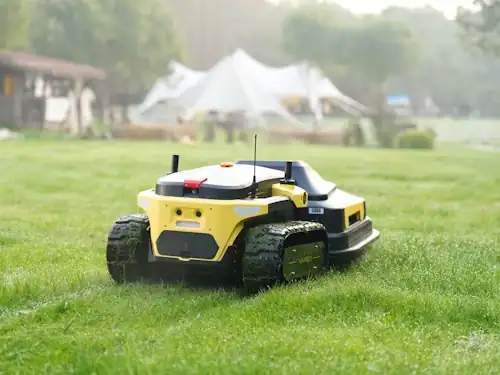
One Motor. Multiple Engineering Considerations.
Robotic lawn mower blade motors must deliver the required torque within a compact installation space while managing electromagnetic noise, vibration and sensor integration. This project combined motor specification evaluation with electromagnetic topology optimization to address these design considerations.
Balancing Torque, Noise and Limited Space
In a robotic lawn mower, the blade-drive motor operates within a restricted installation envelope. Its electromagnetic design influences torque production, vibration behavior, acoustic performance and position-sensor integration.
The engineering challenge was not simply to select a motor with suitable speed and torque. The slot-pole combination also needed to be evaluated for magnetic force distribution, sensitivity to assembly eccentricity and practical Hall sensor installation.
Key Design Considerations
- Achieve the required torque within a compact motor envelope.
- Consider cogging torque and torque ripple that may contribute to vibration.
- Evaluate magnetic force balance and sensitivity to eccentricity.
- Provide practical space for Hall sensor integration.
- Assess acoustic noise under defined test conditions.
From 9S10P to 12S8P: Optimizing the Motor Topology
The design evaluation compared two slot-pole combinations: 9-slot, 10-pole (9S10P) and 12-slot, 8-pole (12S8P). The selected 12S8P configuration was considered for its spatial symmetry, electromagnetic frequency characteristics and suitability for Hall sensor integration.
Key Design Improvements
- Slot-pole evaluation: Compared winding factor and electromagnetic design considerations.
- Magnetic force considerations: Evaluated tooth-force symmetry, unbalanced magnetic pull and potential effects on vibration and bearing loading.
- Magnet profile optimization: Used shaped permanent magnets with unequal thickness to help the air-gap flux distribution approach a sinusoidal waveform.
- Sensor integration: Considered Hall sensor installation within the compact motor design.
Engineering note: The winding factor is only one design parameter. Final motor performance depends on the complete electromagnetic design, magnet geometry, winding arrangement, mechanical tolerances, controller and operating conditions.
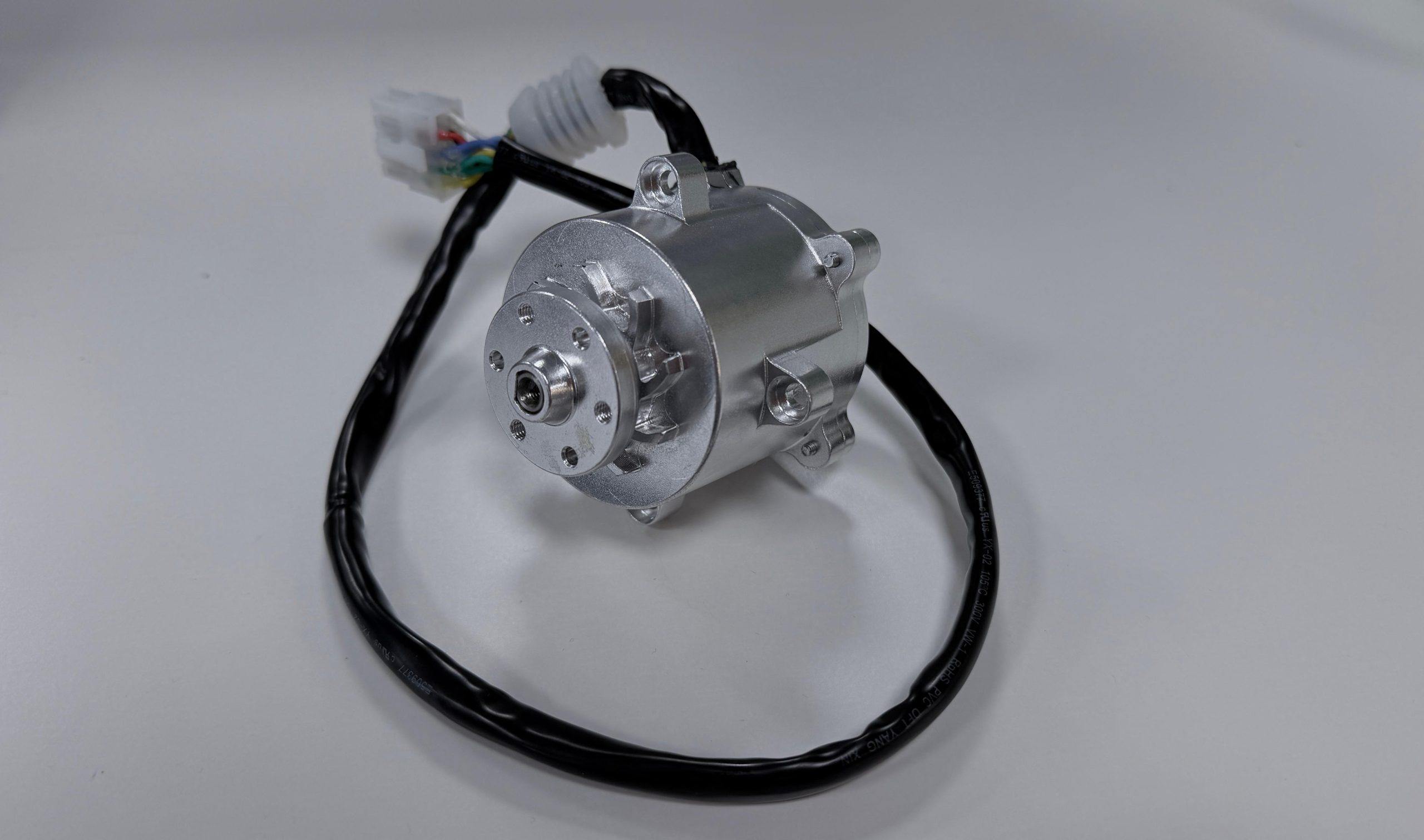
GSBLD57R90D21 BLDC Motor
The following specifications are based on the supplied motor specification sheet. Actual performance depends on the controller, load and operating conditions.
| Model | GSBLD57R90D21 |
|---|---|
| Motor Type | 3-phase, 8-pole, inner-rotor BLDC motor |
| Rated Voltage | 21 V DC |
| Operating Voltage Range | 18–24 V DC |
| No-Load Speed | 5,370 RPM ±10% with dedicated controller |
| Rated Speed | 4,500 RPM ±10% |
| Rated Torque | 0.192 N·m |
| Maximum No-Load Current | 1.1 A |
| Maximum Rated Current | 5.6 A |
| Line Resistance | 0.29 Ω ±10% |
| Line Inductance | 0.24 mH ±5% |
| Motor Weight | 490 g ±20 g |
| Insulation Class | Class F |
| Rotation Direction | CW, viewed from the shaft end |
41.5 dB at 30 cm Under No-Load Conditions
The supplied design document reports a measured noise level of 41.5 dB at a distance of 30 cm under no-load conditions for the optimized 12S8P motor.
This result provides a reference for the project's low-noise design objective. It should be interpreted alongside the measurement distance, operating condition, test environment and measurement method when comparing motors.
What the Design Addresses
- Slot-pole topology selection for the target application.
- Air-gap flux waveform optimization through magnet shaping.
- Design considerations for cogging torque and torque ripple.
- Hall sensor integration within a compact motor assembly.
- Noise evaluation under a defined no-load test condition.
Measurement scope: The 41.5 dB result refers to the no-load measurement reported in the supplied document, taken at 30 cm. It is not a stated sound level for a complete robotic lawn mower cutting grass under load.
Designed Around Robotic Lawn Mower Requirements
For robotic lawn mower manufacturers, motor selection involves more than nominal speed and torque. Electromagnetic design, sensor layout, installation space and test conditions all need to be considered during product development.
Compact Drive Integration
The motor specification provides a reference for evaluating blade-drive integration within space-constrained equipment.
Electromagnetic Optimization
Slot-pole selection and magnet shaping are considered together to address magnetic force distribution, cogging torque and torque ripple.
OEM Development Support
Motor specifications and design priorities can be reviewed against application voltage, speed, torque, controller and installation requirements.
Looking for a BLDC Motor for Your Robotic Lawn Mower?
Share your application requirements with United Motion. Our team can discuss motor specifications, electromagnetic design priorities and potential customization options for your OEM project.
Request a Motor Consultation →