
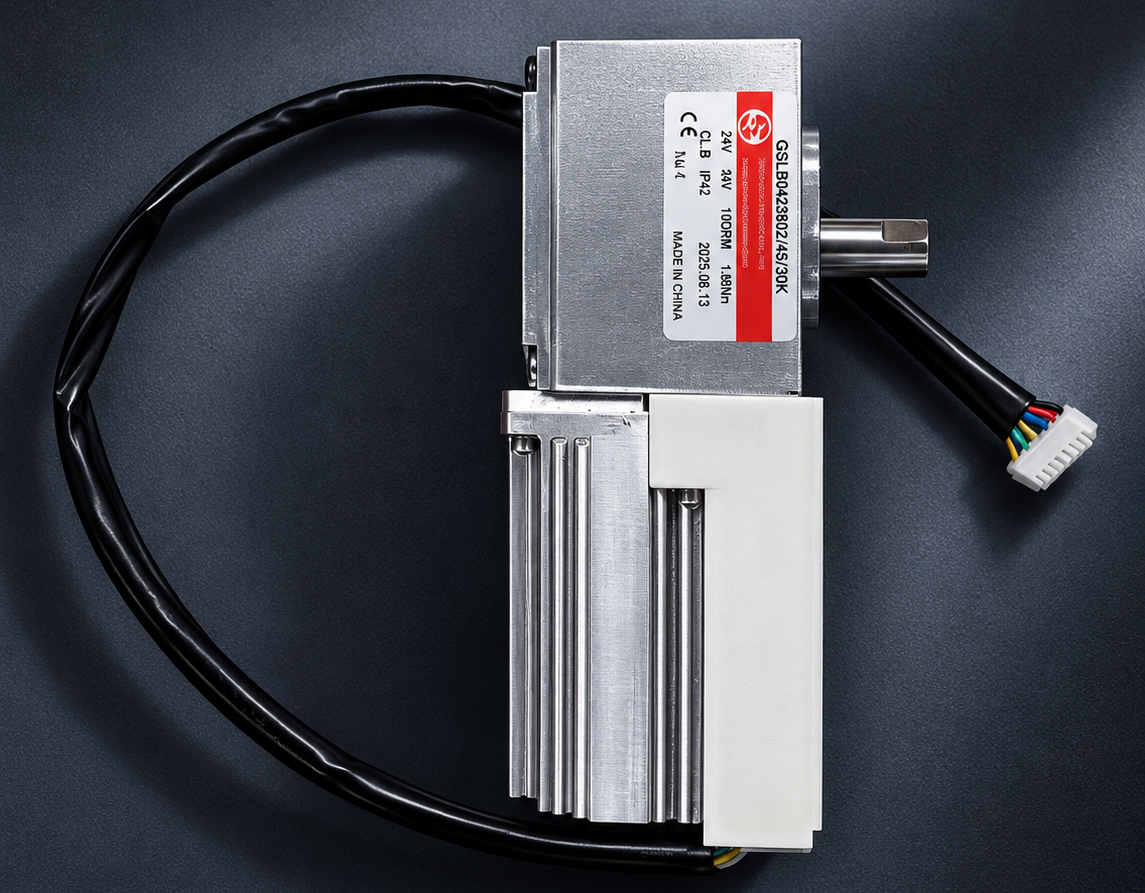
UNITED MOTION INC. Enhances Motor Performance for a Quieter and Smoother Rehabilitation Experience
In rehabilitation and physical therapy equipment, motor performance directly affects user comfort, operational stability and overall product quality. To meet the demanding requirements of rehabilitation beds, UNITED MOTION INC. has continued to optimize motor noise, speed control and overload resistance through coordinated improvements in motor design, control algorithms and mechanical structure.
The latest optimization delivers measurable improvements in three key areas: ultra-low operating noise, precise speed control and stronger overload resistance.
1. Ultra-Low Noise: Operating Noise Reduced to 38.9 dB
A quiet environment is essential for rehabilitation and physical therapy applications. Excessive motor noise can affect relaxation and the overall user experience.
Through comprehensive noise-control optimization, the motor’s maximum operating noise was reduced from 42.1 dB to 38.9 dB, measured under strict conditions with 32 dB ambient noise and a 15 cm measurement distance. The result is better than the original ≤40 dB target.
This improvement comes from a three-dimensional approach combining motor design, software control and mechanical structure:
- Low-speed motor design: The motor is designed for a rated speed of only 10 rpm, combined with a 230:1 reduction ratio. The low-speed configuration helps reduce mechanical friction and vibration at the source.
- FOC sinusoidal control: Field-Oriented Control (FOC) provides precise vector control and smoother current waveforms, reducing torque ripple and electromagnetic noise associated with conventional commutation.
- Housing damping structure: Damping blocks are integrated into the controller housing to absorb and dissipate high-frequency vibration, reducing the risk of secondary resonance and noise amplification.
Together, these measures create a quieter operating environment and help rehabilitation equipment deliver smoother, more comfortable movement.
2. Precise Speed Control: Maximum Speed Deviation Reduced to 3.00%
Speed fluctuations can translate directly into noticeable movement changes for users of rehabilitation equipment.
Through optimization of the motor winding turns and winding configuration, UNITED MOTION INC. reduced the maximum transfer-speed deviation from 4.80% to 3.00%, outperforming the commonly referenced ±5% standard.
Maintaining the motor speed close to the target 10 rpm helps rehabilitation beds achieve more consistent linear movement during lifting and horizontal adjustment. The result is smoother acceleration and operation with fewer noticeable speed fluctuations.
3. Stronger Overload Resistance: 15% Improvement in Motor Rigidity
Rehabilitation equipment must handle changing loads caused by users sitting, lying down or changing positions. These conditions require stable motor performance under sudden load changes.
By optimizing the winding process, UNITED MOTION INC. improved the motor’s speed-torque characteristics. The dynamic speed variation slope, represented by ΔSpeed/ΔTorque, was reduced from 5.94 to 5.04, resulting in an overall 15% improvement in single-motor overload rigidity.
This means that when the rehabilitation bed encounters increased weight or sudden resistance, the motor can better maintain its operating speed and reduce speed drop under load.
Engineering for Better Rehabilitation Equipment
From 38.9 dB low-noise operation to 3.00% speed deviation and 15% improved overload rigidity, UNITED MOTION INC. continues to integrate motor engineering, control technology and structural optimization to address the practical requirements of rehabilitation equipment.
These improvements demonstrate our commitment to developing motor solutions that deliver quieter operation, smoother motion and more stable performance for demanding medical and rehabilitation applications.