What Motor Do Electric Lawn Mowers Use?
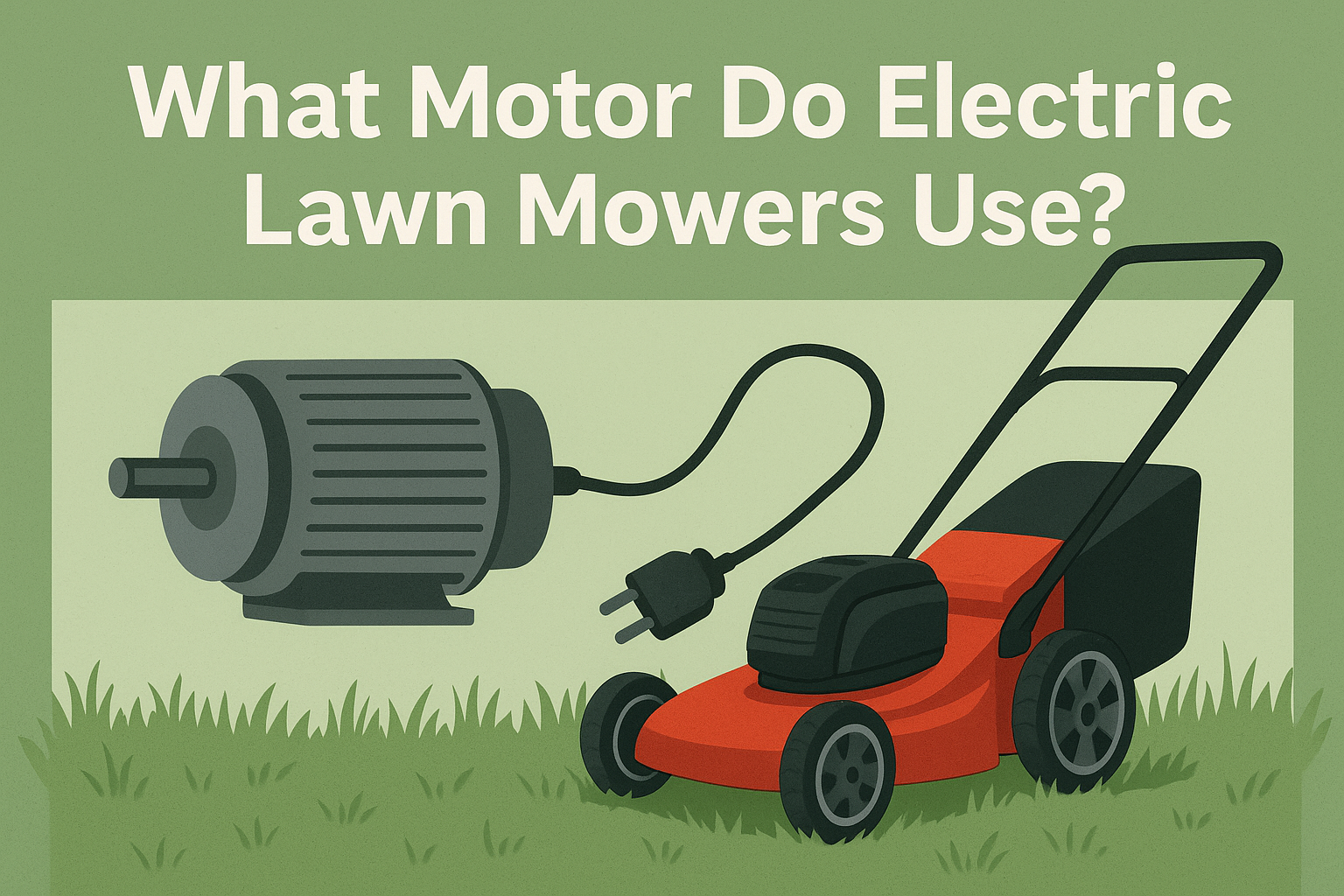
Electric lawn mowers have become one of the fastest-growing tools in the home and garden market. But behind every smooth cut and quiet operation, the choice of motor plays the most important role. If you’ve ever wondered “What motor do electric lawn mowers use?”—this guide gives you the complete picture.
Why Motor Choice Matters in Electric Lawn Mowers?
Buyers today expect lawn mowers to be quiet, powerful, reliable, and energy-efficient. All these benefits depend on the motor at the heart of the machine. A well-designed motor affects cutting performance, operating noise, battery life, safety, and even long-term maintenance costs. With the rise of cordless tools and eco-friendly backyard equipment, the demand for high-performance BLDC motors (Brushless DC motors) has significantly increased. Compared to brushed motors, BLDC motors offer smooth torque control, higher efficiency, longer lifespan, and better overload capacity—qualities that perfectly match the expectations of lawn mower buyers.
At United Motion Inc., we have observed that manufacturers are rapidly shifting from brushed motors to compact and high-efficiency BLDC motors, especially in mid-to-high-end lawn mower models. This change is driven by user-centric needs and tougher performance standards in outdoor power equipment.
The Most Common Motors Used in Electric Lawn Mowers
Brushed DC Motors (BDC)
These were once the most common motors found in entry-level electric mowers. They are simple, inexpensive, and easy to maintain. However, they come with several drawbacks:
- Shorter lifespan due to brush wear
- Lower efficiency
- Higher noise
- Reduced torque output compared to BLDC
- More heat generated during continuous cutting
Although brushed motors still appear in budget lawn mowers, they are being phased out as users demand higher performance and longer runtimes.
Brushless DC Motors (BLDC) – The Industry Standard Today
This is the most widely used motor type in modern electric lawn mowers, especially cordless battery-powered models. BLDC motors deliver:
- High torque to handle dense or wet grass
- Long lifespan with zero brush wear
- 30–40% higher efficiency vs. brushed motors
- Quiet operation, ideal for residential neighborhoods
- Better heat management for long mowing sessions
- Precise speed control for adjustable cutting modes
Electric lawn mower manufacturers choose BLDC motors because they are durable, energy-efficient, and support smart features such as speed load sensing. These motors also help extend battery runtime—one of the biggest pain points for cordless mower users.
Why BLDC Motors Are the Preferred Choice for Modern Outdoor Power Tools?
If we look at buyer reviews and search habits, users increasingly ask for terms like “quiet lawn mower,” “high-efficiency motor,” “long battery life mower,” and “brushless lawn mower technology.” All of these expectations point directly to BLDC motor advantages.
BLDC motors solve common consumer pain points:
- No burning smell after long mowing
- No power drops when tackling thick grass
- Reduced maintenance—no brush replacements
- Compatible with high-capacity lithium battery systems
Because of this, United Motion Inc. has become a trusted supplier of high-efficiency BLDC motors for outdoor equipment, helping brands improve product reliability and user satisfaction.
Key Performance Requirements of Lawn Mower Motors
Manufacturers choose motors based on a set of performance factors that directly influence mowing quality:
Torque Output
A strong torque curve is necessary for dense or wet grass. BLDC motors produce consistent torque across the speed range.
Power Rating (Wattage)
Home lawn mowers usually rely on motors between 350W–1500W, depending on the size and load requirements.
RPM Range
Typical blade speeds range between 2800–3500 RPM. A good BLDC motor maintains stable RPM even under heavy loads.
Efficiency
High efficiency reduces energy loss, improves battery runtime, and stabilizes performance.
Heat Resistance
Outdoor environments require motors that maintain stable operation even in summer conditions.
Motor Protection
Best-quality motors include:
- Overcurrent protection
- Overtemperature shutdown
- Stall protection
These features ensure safety and extend product lifespan—top priorities for today’s consumers.
Understanding Lawn Mower Design and Why Motor Placement Matters
Electric lawn mowers generally use two blade-driving structures:
Direct-Drive Systems
The motor shaft is directly attached to the blade.
Advantages:
- High efficiency
- No energy loss from belts or gears
- Simple structure
This configuration is perfect for BLDC motors because of their stable torque.
Gear or Belt-Drive Systems
These are more common in older or budget-friendly models.
Advantages:
- Lower motor RPM required
- Reduced sudden torque impact
However, they present drawbacks:
- More mechanical wear
- Greater noise
- Efficiency loss
As lawn mower trends shift toward lightweight and compact designs, direct-drive BLDC systems are becoming the dominant structure.
How BLDC Motors Improve Cutting Performance?
Customers often mention two big issues:
“My mower stalls when the grass is thick.”
“Battery runs out too fast.”
BLDC motors solve both. They maintain stable torque and automatically increase power when encountering resistance. Many mowers equipped with BLDC motors offer “smart load sensing,” adjusting speed based on grass thickness to balance power and runtime.
At United Motion Inc., we develop BLDC motors with optimized torque curves specifically for outdoor cutting tools. This helps manufacturers deliver smoother cuts and more efficient energy usage.
Battery Technology and Motor Efficiency: A Perfect Match
Modern cordless mowers use lithium-ion battery systems, typically 24V, 36V, or 48V. BLDC motors are designed to pair with these systems due to:
- Low power consumption
- High efficiency
- Better runtime per charge
- Smooth current draw
This integration gives users better mowing performance and longer working hours—one of the biggest selling points in the lawn care equipment market.
Maintenance Advantages of BLDC Motors
One major consumer pain point is motor maintenance.
Brushed motors require periodic inspection and brush replacement, while BLDC motors are virtually maintenance-free.
Key user benefits:
- No carbon brush wear
- Minimal internal friction
- Better long-term reliability
- Lower cost of ownership
This is why companies looking to upgrade product lines increasingly adopt BLDC solutions from manufacturers like United Motion Inc.
Environmental and Noise Regulations Are Changing the Industry
Governments are tightening restrictions on noise and emissions in residential areas. Electric lawn mowers with BLDC motors comply more easily with:
- Local noise ordinances
- Environmental guidelines
- Energy efficiency standards
For this reason, motor selection is not only a performance decision—it is becoming a regulatory requirement. BLDC motors provide quiet, emission-free operation that aligns with modern sustainability standards.
Why Manufacturers Choose United Motion Inc. Motors for Lawn Mowers?
United Motion Inc. supplies high-quality BLDC motors built specifically for outdoor tools, including lawn mowers, garden trimmers, hedge cutters, and small agricultural equipment.
Our motors offer:
- High torque density
- Low noise operations
- Long service life
- Custom voltage and RPM options
- Strong protection features
- Excellent thermal management
- Compact structure for lightweight mower designs
Manufacturers trust our products because our engineering standards match the performance needs of modern electric outdoor equipment.
Common Buyer Questions About Lawn Mower Motors
Which motor is best for thick or wet grass?
BLDC motors provide stronger torque and load response, making them the best option.
Do BLDC motors last longer?
Yes. Without brushes, their lifespan can be 3–5 times longer than brushed motors.
Are brushless mowers quieter?
Absolutely. BLDC motors eliminate mechanical friction and reduce noise significantly.
Are they worth the higher price?
Yes. Better efficiency, long life, and improved performance lead to lower long-term costs.
How to Select the Right Motor for Your Electric Lawn Mower Project?
When selecting the right motor for your electric lawn mower project, manufacturers need to look at several key factors to ensure optimal performance and reliability. First, it’s essential to evaluate the required cutting torque, as this determines whether the motor can handle dense or tall grass without stalling. Matching the motor to the battery voltage is equally important, ensuring efficiency and preventing power mismatch issues. You should also consider the blade size and diameter, since these directly influence the motor load and the overall mowing width you wish to achieve.
In addition, noise level targets play a role in choosing a motor that meets user expectations for a quiet mowing experience. Runtime requirements must be taken into account as well, especially for battery-powered models that need to operate long enough on a single charge. Overload protection is another crucial factor, helping safeguard both the motor and the mower during tough cutting conditions. Finally, be sure to assess the operating environment—temperature, humidity, debris, and vibration—to select a motor that can maintain performance and durability under real-world use.