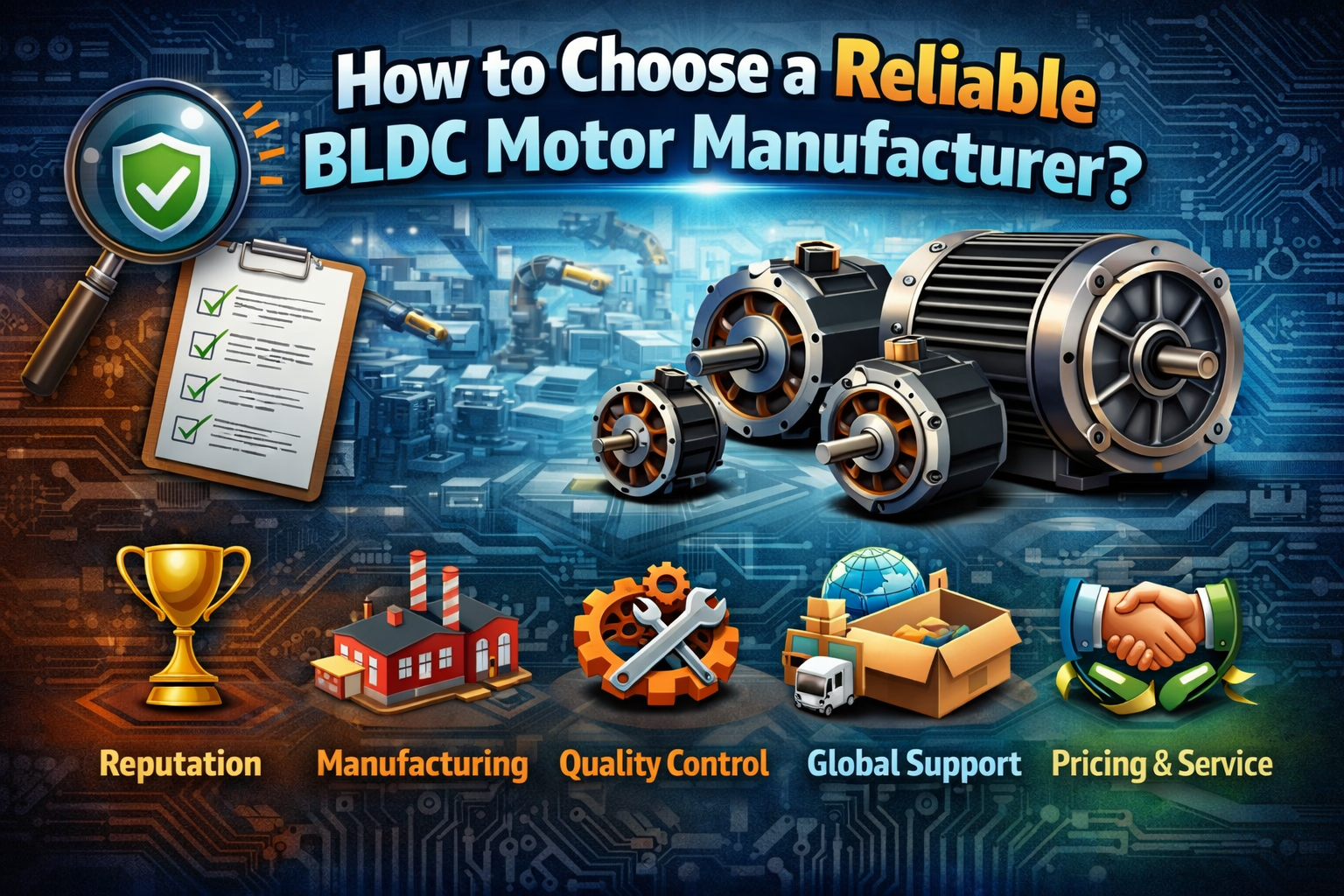
How to Choose a Reliable BLDC Motor Manufacturer?
Choosing the right BLDC motor manufacturer is not just about price—it directly affects your product quality, performance stability, and long-term business success. Many buyers face issues like inconsistent motor performance, delayed delivery, and poor technical support. This guide will help you avoid those risks and select a manufacturer you can trust.
Why Choosing the Right BLDC Motor Manufacturer Matters?
In today’s competitive market, Brushless DC motors (BLDC motors) are widely used in robotics, automation, medical devices, and electric vehicles. However, not all manufacturers deliver the same level of quality and reliability. A poor supplier can lead to system failures, higher maintenance costs, and even damage to your brand reputation.
A reliable BLDC motor manufacturer ensures consistent torque output, high efficiency, and long service life. More importantly, they act as a long-term partner, helping you optimize your application rather than just selling a product. This is especially critical for OEM buyers and engineering teams that rely on stable performance across large production volumes.
Common Pain Points When Sourcing BLDC Motors
Many buyers encounter similar challenges during procurement, especially when sourcing from overseas suppliers or unfamiliar brands.
One major issue is inconsistent quality control. Some manufacturers lack strict production standards, leading to variations in motor performance across batches. This creates problems in precision applications such as robotics or medical equipment.
Another common pain point is lack of customization capability. Many off-the-shelf motors do not meet specific requirements like torque, speed, or size constraints. Without engineering support, buyers are forced to compromise, which reduces overall system efficiency.
Buyers also struggle with communication delays and weak technical support. When issues arise, slow response times can disrupt production schedules and increase downtime costs.
Finally, unclear certifications and compliance risks can create serious problems when entering global markets. Motors without proper certifications may fail to meet regulatory requirements.
Key Factors to Evaluate a BLDC Motor Manufacturer
1. Manufacturing Experience and Industry Expertise
A manufacturer with extensive experience in BLDC motor production is more likely to understand complex application requirements. Years of industry experience often translate into better design capabilities, refined production processes, and stronger problem-solving skills.
Look for companies that specialize in BLDC motor manufacturing rather than general motor production. Specialized manufacturers typically have deeper technical knowledge and more advanced testing systems.
2. Product Quality and Testing Standards
High-quality BLDC motors require strict quality control at every stage of production. Reliable manufacturers invest in advanced testing equipment to ensure consistent performance.
Important quality indicators include:
• Thermal performance testing
• Noise and vibration analysis
• Lifetime testing
• Efficiency validation
Manufacturers that follow international standards such as ISO are generally more reliable. Consistency is key, especially for large-volume orders.
3. Customization Capabilities
Every application has unique requirements, whether it is a robotic lawn mower, medical device, or industrial automation system. A reliable BLDC motor manufacturer should offer strong customization support.
Customization may include:
• Voltage and power adjustments
• Shaft design and mounting options
• Gearbox integration (planetary gear motors)
• Controller matching and optimization
Manufacturers with in-house engineering teams can help you design a motor tailored to your application, improving performance and reducing system complexity.
4. Supply Chain Stability and Delivery Time
Delivery delays can disrupt your entire production line. A reliable supplier must have a stable supply chain and strong production capacity.
Key aspects to evaluate include:
• Production lead times
• Inventory management
• Raw material sourcing
• Scalability for large orders
Manufacturers with automated production lines and well-managed logistics systems are more likely to meet deadlines consistently.
5. Technical Support and Communication
Technical support is often overlooked but plays a critical role in long-term cooperation. A good manufacturer provides fast, clear, and professional communication.
Look for suppliers that offer:
• Pre-sales technical consultation
• Application-based motor selection
• After-sales troubleshooting support
• Engineering documentation and datasheets
Clear communication reduces misunderstandings and ensures smooth project execution.
6. Certifications and Compliance
For global buyers, compliance is non-negotiable. Reliable BLDC motor manufacturers should provide necessary certifications such as:
• CE certification
• RoHS compliance
• ISO quality management
These certifications ensure that the motors meet safety and environmental standards required in international markets.
7. Cost vs Value (Not Just Price)
Many buyers make the mistake of choosing the lowest price supplier. However, cheaper motors often lead to higher long-term costs due to failures, replacements, and downtime.
Instead of focusing only on price, evaluate the total value, including:
• Product lifespan
• Energy efficiency
• Maintenance requirements
• Technical support
A slightly higher upfront cost can result in significant savings over time.
Why Work with a Professional BLDC Motor Manufacturer Like United Motion Inc.?
At United Motion Inc., we understand the real challenges buyers face when sourcing BLDC motors. Our approach focuses on delivering not just products, but complete motion solutions.
We provide:
• High-performance BLDC motors with strict quality control
• Custom motor design based on your application
• Integrated solutions including gear motors and controllers
• Fast response and professional technical support
• Stable production capacity for bulk orders
Our goal is to help you improve product performance while reducing overall costs and risks.
Application Insights: Matching the Right Motor to Your Needs
Choosing the right manufacturer also depends on your application. Different industries require different motor characteristics. For example, in robotic lawn mowers, motors must be efficient, durable, and weather-resistant. In medical equipment, precision and low noise are critical. In industrial automation, high torque and reliability are essential. A reliable manufacturer will analyze your application and recommend the best motor configuration instead of offering generic solutions.
Red Flags to Avoid When Choosing a Supplier
Not all suppliers are trustworthy. Watch out for these warning signs:
• Lack of clear technical documentation
• Unrealistically low pricing
• Poor communication or slow response
• No verifiable certifications
• Limited customization options
These issues often indicate deeper problems in quality control or operational capability.
Future Trends in BLDC Motor Manufacturing
The BLDC motor industry is evolving rapidly with advancements in technology. Key trends include:
• Higher efficiency and energy-saving designs
• Integration with smart controllers and IoT systems
• Compact and lightweight motor structures
• Increased demand in electric vehicles and robotics
Choosing a forward-thinking manufacturer ensures your products remain competitive in the future.
Final Thoughts
Selecting a reliable BLDC motor manufacturer is a strategic decision that impacts your product quality, cost structure, and market competitiveness. By focusing on experience, quality, customization, and support, you can build a strong partnership that drives long-term success. Instead of chasing the lowest price, prioritize reliability and value. A trusted manufacturer like United Motion Inc. can help you reduce risks, improve performance, and scale your business with confidence.
References
1. International Electrotechnical Commission (IEC) – Motor Standards
2. IEEE Industry Applications Society – Motor Efficiency Guidelines
3. U.S. Department of Energy – Electric Motor Systems Overview
4. ISO 9001 Quality Management Standards Documentation
5. Global Market Insights – BLDC Motor Market Trends Report
Related blog: How to Choose a BLDC Motor with Brake for Industrial Automation?