
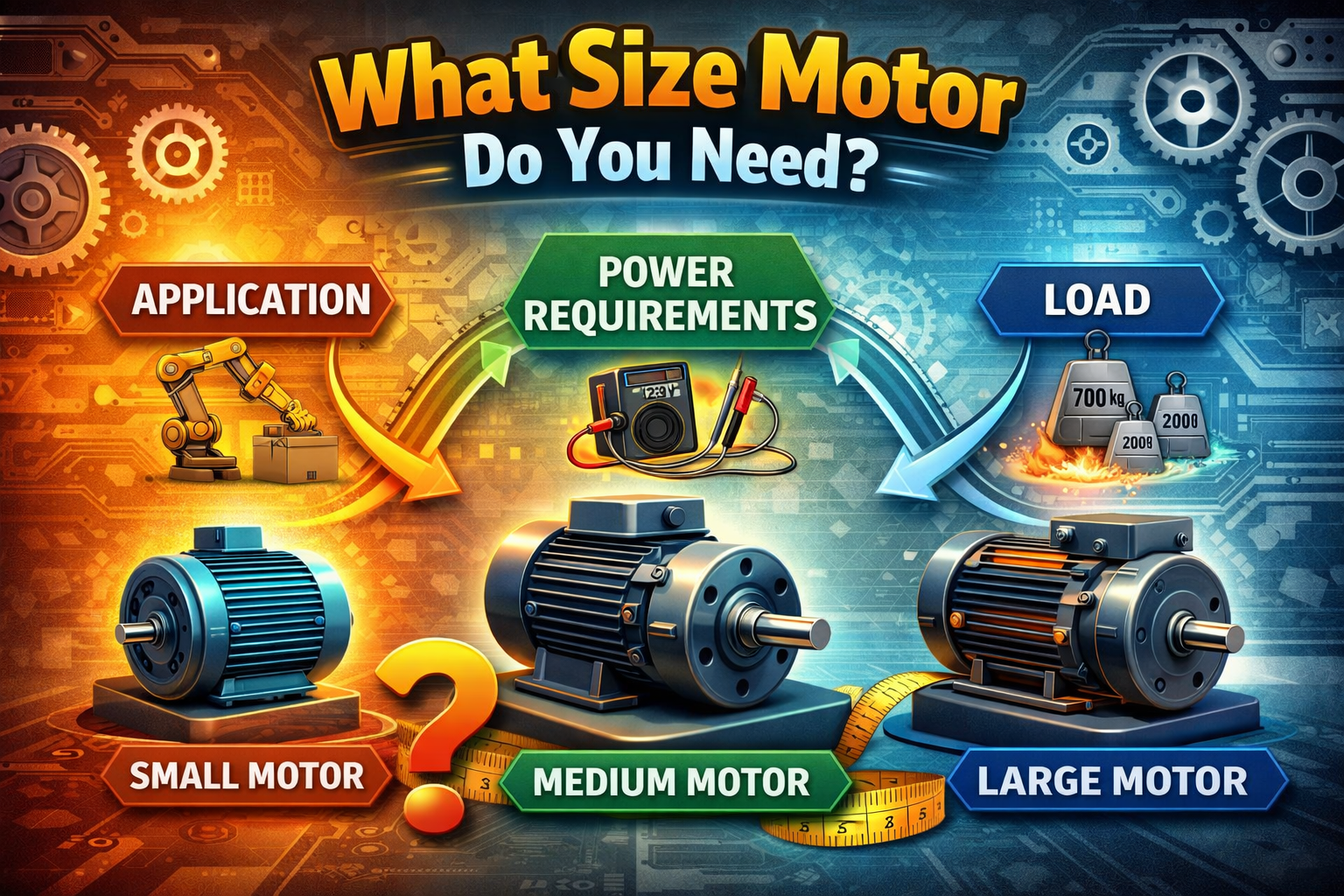
What Size Motor Do You Need?
Choosing the right motor size is one of the most common challenges engineers and buyers face when designing or sourcing motion systems. Many projects fail or underperform not because of poor components, but because the motor is either oversized or undersized. This leads to wasted cost, overheating, inefficiency, or even system failure. Understanding how to properly size a motor is not just a technical task—it is a critical decision that directly impacts performance, reliability, and long-term operating cost.
In this guide, we will walk through how to determine the correct motor size, explain real-world applications, and highlight key factors buyers often overlook. Whether you are sourcing a solution from a BLDC motor manufacturer or optimizing an existing system, this article will help you make confident, informed decisions.
Why Motor Sizing Matters More Than You Think?
Motor sizing is not simply about picking a motor that “works.” It is about finding the balance between performance, efficiency, and durability. An undersized motor may struggle under load, leading to overheating and reduced lifespan. On the other hand, an oversized motor increases upfront costs, consumes more energy, and may reduce system responsiveness.
In industrial applications such as robotics, automation systems, and electric vehicles, improper motor sizing often results in inconsistent performance or frequent maintenance. Buyers searching for terms like “how to choose motor size” or “correct motor sizing calculation” are usually dealing with these exact problems. The key is to understand that motor sizing is not just about power—it involves torque, speed, duty cycle, and environmental conditions.
Step 1: Understand Your Application Requirements
Before selecting any motor, you must clearly define your application. This includes understanding how the motor will be used, what load it will drive, and how often it will operate. For example, a conveyor system requires consistent torque over long periods, while a robotic arm needs precise, dynamic motion.
Start by asking the following questions:
• What type of load will the motor drive?
• Is the load constant, variable, or intermittent?
• What is the required speed (RPM)?
• What is the operating environment (temperature, dust, humidity)?
For buyers working with a custom motor manufacturer, providing these details upfront can significantly reduce development time and ensure better results.
Step 2: Calculate Required Torque
Torque is the most critical factor in motor sizing. It represents the rotational force needed to move your load. Without enough torque, even the most powerful motor will fail to perform.
To estimate torque, you need to consider:
• Load weight
• Radius or distance from the shaft
• Friction and resistance forces
The basic formula is:
Torque (Nm) = Force × Radius
In real-world applications, additional safety factors are applied to account for inefficiencies and unexpected loads. For example, in a robotic lawn mower, uneven terrain and grass density can significantly increase torque demand. This is why many engineers search for “high torque BLDC motor for robotics” when designing such systems.
Step 3: Determine Speed Requirements
Speed, measured in RPM (revolutions per minute), defines how fast the motor must operate. Different applications require different speed ranges. For example:
• Fans and pumps typically require high speed and low torque
• Conveyor systems require moderate speed and consistent torque
• Precision equipment requires controlled, variable speed
It is important to match motor speed with your application. In many cases, a gear motor is used to adjust output speed and increase torque. This is especially common in industrial automation and robotics.
Step 4: Consider Power and Efficiency
Once torque and speed are defined, you can calculate the required motor power using the formula:
Power (W) = Torque × Speed
Efficiency plays a major role here. A highly efficient motor, such as a brushless DC motor (BLDC motor), reduces energy loss and heat generation. This is why BLDC motors are widely used in modern applications, from electric vehicles to smart home devices.
Buyers often search for “energy efficient motor solutions” or “high efficiency BLDC motor manufacturer” because reducing energy consumption directly lowers operating costs.
Step 5: Evaluate Duty Cycle and Operating Conditions
Not all motors run continuously. Some operate in short bursts, while others run 24/7. The duty cycle defines how long a motor operates versus how long it rests.
For example:
• Continuous duty: Conveyor systems, HVAC systems
• Intermittent duty: Robotic arms, actuators
• Start-stop duty: Packaging machines
Environmental conditions also matter. High temperatures, dust, or moisture can affect motor performance and lifespan. Choosing a motor with the right protection rating ensures reliability in harsh environments.
Step 6: Account for Safety Margins
One of the most common mistakes in motor sizing is ignoring safety margins. Real-world conditions are rarely ideal, and unexpected loads can occur. A typical recommendation is to add a 20%–30% safety margin to your calculated torque and power requirements. This ensures that the motor can handle peak loads without stress. For buyers sourcing from a reliable motor supplier, this is often included in engineering recommendations. However, understanding it yourself gives you more control over the final selection.
Common Motor Sizing Mistakes (And How to Avoid Them)
Many buyers make similar mistakes when selecting motor size. These include:
1. Choosing Based on Price Alone
Low-cost motors may seem attractive, but they often lack the performance or durability required for industrial applications.
2. Ignoring Real Load Conditions
Lab calculations often differ from real-world conditions. Always consider friction, wear, and environmental factors.
3. Overlooking Efficiency
An inefficient motor increases energy consumption and operating cost over time.
4. Not Consulting Experts
Working with an experienced electric motor manufacturer can help avoid costly errors and improve system performance.
Real-World Application Examples
Robotic Lawn Mowers
In robotic lawn mowers, motor size depends on terrain, blade resistance, and battery capacity. Typically, a combination of 36mm or 42mm BLDC motors is used for driving wheels, while a larger motor powers the cutting blade.
Industrial Automation
In conveyor systems, motor size must match load weight and speed requirements. A properly sized motor ensures smooth operation and reduces downtime.
Medical Equipment
Precision and reliability are critical. Motors must be carefully sized to provide smooth, quiet operation without overheating.
Why BLDC Motors Are Often the Best Choice?
Brushless DC motors have become the preferred solution in many industries due to their high efficiency, long lifespan, and low maintenance requirements. Compared to traditional brushed motors, they offer better performance and reliability.
Key benefits include:
• Higher efficiency and lower energy consumption
• Reduced heat generation
• Longer operational life
• Precise speed control
This is why many buyers specifically search for “BLDC motor manufacturer for industrial applications” when sourcing components.
How United Motion Inc. Helps You Choose the Right Motor?
At United Motion Inc., we understand that motor sizing is not just a technical requirement—it is a business decision. Our team works closely with clients to analyze application needs, calculate precise motor specifications, and deliver optimized solutions.
We provide:
• Custom motor design services
• High-efficiency BLDC motor solutions
• Gear motor integration
• Engineering support for motor sizing
Whether you are developing a new product or upgrading an existing system, choosing the right motor size can significantly improve performance and reduce costs.
Extra Insights: Future Trends in Motor Sizing
The future of motor sizing is becoming more data-driven. With the rise of smart manufacturing and IoT technologies, motors are increasingly integrated with sensors and control systems that optimize performance in real time. Engineers are now using simulation tools and AI-based models to predict load behavior and improve motor selection accuracy. This trend is making motor sizing more precise and reducing the risk of failure.
Additionally, energy efficiency regulations are pushing manufacturers to adopt more efficient motor technologies, further increasing the demand for BLDC motors.
Conclusion
Choosing the right motor size is essential for achieving optimal performance, efficiency, and reliability. By understanding your application requirements, calculating torque and speed accurately, and considering real-world conditions, you can avoid common pitfalls and make better decisions.
Working with an experienced partner like United Motion Inc. ensures that you not only select the right motor but also optimize your entire system for long-term success.
References
1. IEEE Industry Applications Society – Motor Selection Guidelines
2. U.S. Department of Energy – Electric Motor Efficiency Standards
3. Engineering Toolbox – Torque and Power Calculations
4. NEMA (National Electrical Manufacturers Association) – Motor Standards
5. Automation World – Motor Sizing Best Practices
Related blog: How to Choose a BLDC Motor with Brake for Industrial Automation?