
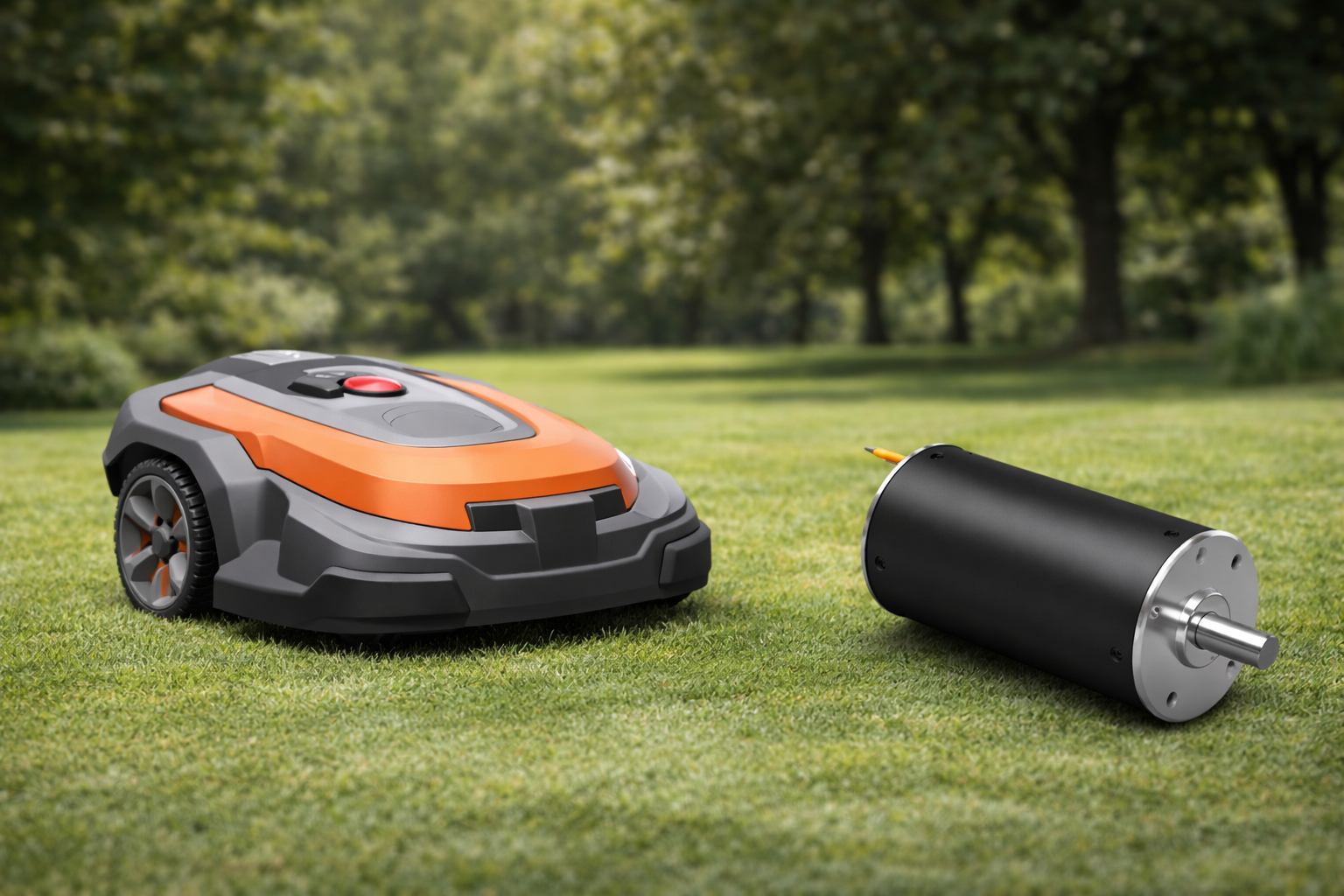
Motors Used in Commercial Lawn Mowers
Commercial lawn care is no longer just about cutting grass. It is about speed, consistency, cost control, and reliability in demanding environments. Choosing the right motor is one of the most critical decisions for manufacturers and fleet operators, yet it is often misunderstood or oversimplified.
This guide explains everything you need to know about motors used in commercial lawn mowers, including motor types, real-world applications, selection criteria, and industry trends. Whether you are building equipment or sourcing components, this article will help you make smarter decisions.
Why Motor Selection Matters in Commercial Lawn Mowers?
In commercial landscaping, downtime is expensive. Equipment failure can delay jobs, increase labor costs, and damage your reputation. Many buyers focus only on power ratings, but the real performance depends on the motor design, efficiency, and durability under continuous load.
Modern commercial lawn mowers operate in harsh conditions. They deal with thick grass, uneven terrain, dust, moisture, and long working hours. This means the motor must deliver:
- High torque at low speeds
- Stable operation under heavy load
- Long lifespan with minimal maintenance
- Energy efficiency for cost control
Choosing the wrong motor often leads to overheating, frequent failures, and higher total ownership costs. That is why more manufacturers now prioritize high-efficiency electric motor solutions.
Main Types of Motors Used in Commercial Lawn Mowers
Commercial lawn mowers use several types of motors depending on application requirements. Each type has its advantages and limitations.
1. Brushed DC Motors
Brushed DC motors are one of the oldest and most widely used motor types. They are simple, cost-effective, and easy to control.
These motors use brushes and a commutator to deliver current to the rotor. While this design is reliable in low-cost applications, it has clear drawbacks in commercial environments. The brushes wear out over time, requiring maintenance and replacement.
In commercial lawn mowers, brushed DC motors are typically used in entry-level or budget equipment, but they are gradually being replaced by more advanced solutions.
Key advantages:
- Low initial cost
- Simple control system
- Easy integration
Limitations:
- Shorter lifespan due to brush wear
- Lower efficiency
- Higher maintenance needs
2. Brushless DC Motors (BLDC Motors)
BLDC motors are now the most popular choice in modern commercial lawn mowers. They eliminate brushes and use electronic commutation, which improves efficiency and reliability.
These motors provide high torque, low noise, and longer service life, making them ideal for both drive systems and cutting mechanisms.
For commercial applications, BLDC motors are widely used in:
- Robotic lawn mowers
- Ride-on electric mowers
- Walk-behind commercial units
Key advantages:
- High efficiency and energy savings
- Long lifespan with minimal maintenance
- Better heat management
- Compact and lightweight design
Limitations:
- Higher upfront cost
- Requires electronic controller
BLDC motors are especially important for companies transitioning to battery-powered commercial lawn mowers, where efficiency directly impacts runtime.
3. Permanent Magnet Synchronous Motors (PMSM)
PMSM motors are similar to BLDC motors but offer smoother performance and higher efficiency under certain conditions. They are commonly used in high-end commercial equipment.
These motors provide:
- Precise speed control
- High power density
- Excellent performance under variable loads
In commercial lawn mowers, PMSM motors are often used in premium robotic systems and advanced drive systems.
4. Induction Motors
Induction motors are widely used in industrial applications and some heavy-duty lawn equipment. They are known for their durability and ability to handle tough environments.
However, they are less common in battery-powered systems because they are generally less efficient compared to BLDC motors.
Best suited for:
Large commercial mowing equipment
Applications with continuous power supply
Key Applications of Motors in Commercial Lawn Mowers
Understanding how motors are used helps buyers choose the right configuration.
1. Drive Wheel Motors
Drive motors are responsible for moving the mower across different terrains. These motors must deliver high torque and strong traction, especially on slopes and uneven ground.
For commercial robotic lawn mowers, drive motors must also support:
- Precise navigation
- Obstacle handling
- Continuous operation
BLDC gear motors are commonly used in this application because they provide the required torque and efficiency.
2. Blade (Cutting) Motors
Blade motors handle the actual cutting process. This is one of the most demanding parts of the system because it requires high-speed rotation and stable output.
In commercial lawn mowers, blade motors must:
- Maintain consistent speed
- Resist sudden load changes
- Operate safely under heavy conditions
High-power BLDC motors and PMSM motors are often used here.
3. Steering and Control Motors
In advanced commercial equipment, especially robotic systems, motors are also used for steering and positioning.
These motors must provide:
- High precision
- Quick response
- Reliable control
Industry Pain Points and Challenges
Buyers in the commercial lawn mower industry face several common challenges when selecting motors.
1. Overheating and Performance Loss
Many motors fail because they cannot handle continuous heavy loads. Overheating reduces efficiency and shortens lifespan.
2. Short Lifespan and High Maintenance
Traditional motors with brushes require frequent maintenance. This increases downtime and operational costs.
3. Energy Efficiency Concerns
Battery-powered mowers depend heavily on motor efficiency. Poor motor design leads to shorter runtime and higher energy costs.
4. Noise and Environmental Regulations
Commercial landscaping increasingly requires low-noise and eco-friendly equipment. Motors play a key role in meeting these requirements.
How to Choose the Right Motor for Commercial Lawn Mowers?
Selecting the right motor requires a balance of performance, cost, and reliability.
1. Torque and Speed Requirements
Different applications require different torque and speed levels. For example:
Drive motors need high torque
Blade motors need high speed
Understanding these requirements is critical.
2. Voltage and Power Compatibility
Battery-powered systems often use 24V, 36V, or 48V configurations. The motor must match the system design.
3. Efficiency and Energy Consumption
High-efficiency motors reduce energy use and extend battery life. This is especially important for robotic lawn mowers.
4. Durability and Protection
Look for motors with:
- Dust and water resistance
- Strong thermal management
- Robust housing
5. Customization Capability
Many commercial applications require customized motor solutions. Working with a manufacturer like United Motion Inc. allows you to tailor motor specifications for your product.
Emerging Trends in Commercial Lawn Mower Motors
The industry is evolving rapidly, driven by technology and environmental demands.
1. Electrification
Gas-powered mowers are being replaced by electric systems. This shift increases demand for high-performance electric motors.
2. Smart and Autonomous Systems
Robotic lawn mowers are becoming more common. These systems require advanced motor control and integration.
3. High-Efficiency Motor Design
Manufacturers are focusing on improving efficiency to reduce energy consumption and operating costs.
4. Compact and Lightweight Motors
Modern designs prioritize compact size without sacrificing performance.
Why Choose United Motion Inc. for Lawn Mower Motors?
United Motion Inc. specializes in high-performance motor solutions designed for demanding applications.
Our motors are built to meet the needs of commercial lawn mower manufacturers, offering:
- High efficiency for longer runtime
- Strong torque output for tough terrain
- Reliable performance under continuous operation
- Custom engineering support
We provide solutions for:
- Drive systems
- Blade motors
- Robotic lawn mower applications
Conclusion
Motors are the core of commercial lawn mower performance. Choosing the right motor directly impacts efficiency, durability, and overall cost.
BLDC motors and PMSM motors are leading the industry due to their efficiency and reliability. As the market shifts toward electric and autonomous systems, selecting advanced motor solutions becomes even more important.
For manufacturers and buyers, the key is to focus not just on cost, but on long-term performance and value.
References
International Electrotechnical Commission (IEC) – Electric Motor Standards
U.S. Department of Energy – Motor Systems Efficiency Guide
IEEE Papers on Brushless DC Motor Applications
Outdoor Power Equipment Institute (OPEI) Industry Reports
Research on Electric Drive Systems in Landscaping Equipment
Related blog: Lawn Mower Motor Solutions for Robotic Mowers