
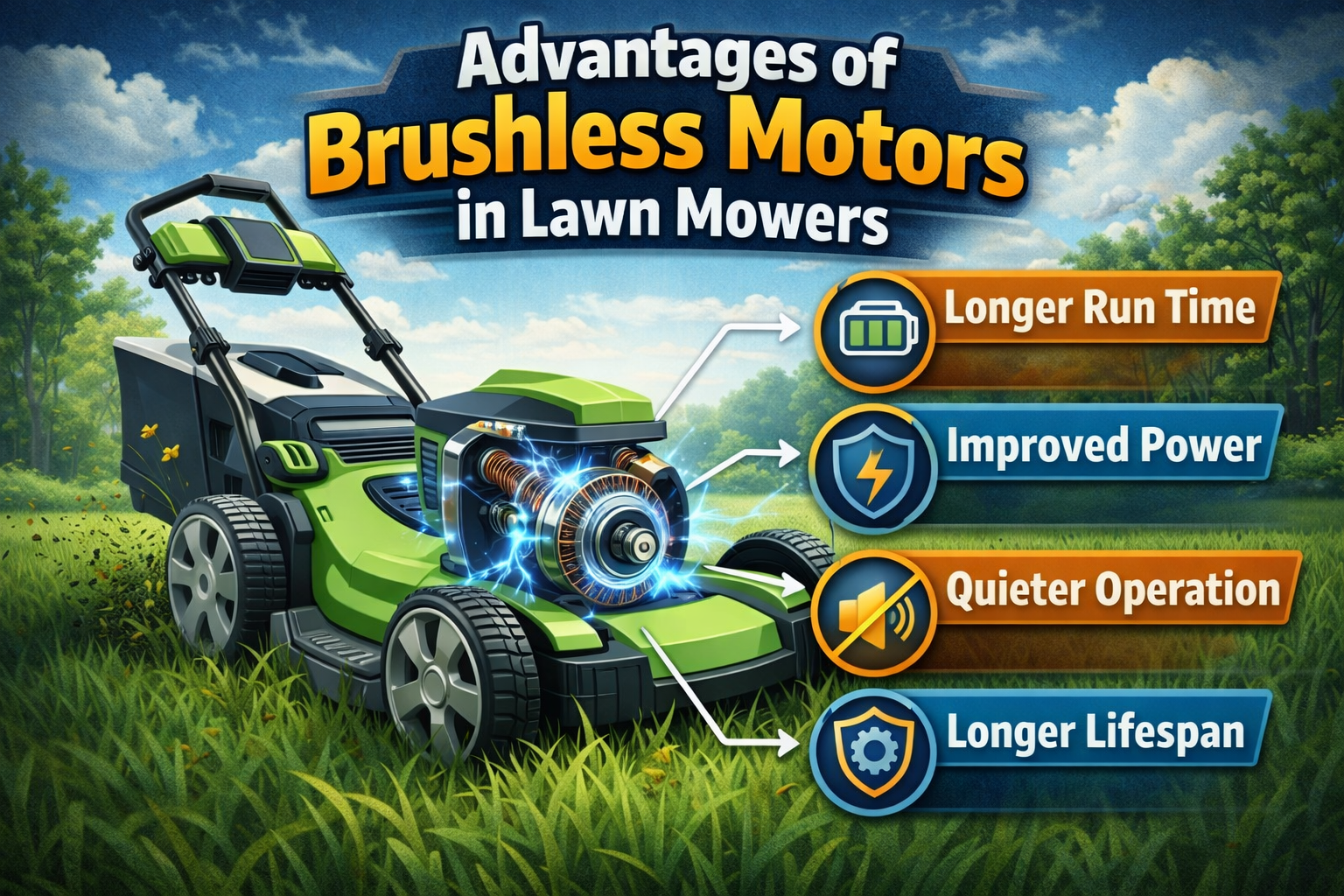
Advantages of Brushless Motors in Lawn Mowers
Choosing the right motor is one of the most important decisions in lawn mower design. Whether you are building a robotic lawn mower or upgrading a commercial electric mower, performance, efficiency, and durability all depend heavily on the motor. In recent years, brushless DC motors (BLDC motors) have become the preferred solution across the industry, replacing traditional brushed motors in many applications.
This shift is not just a trend. It is driven by real-world pain points such as overheating, maintenance costs, limited lifespan, and energy inefficiency. Buyers today are actively searching for high-efficiency lawn mower motors, robotic lawn mower motor manufacturers, and low-maintenance electric drive solutions. Brushless motors directly address these needs.
In this article, we will explore why BLDC motors are transforming the lawn mower industry, what advantages they offer, and how to choose the right motor for your application.
Understanding Brushless Motors in Lawn Mower Applications
Before diving into the advantages, it is important to understand how brushless motors work and why they are different.
A brushless DC motor uses electronic commutation instead of mechanical brushes. Instead of physical contact to switch current, it relies on a controller to manage the flow of electricity. This design eliminates friction points, reduces heat generation, and improves overall efficiency.
In lawn mowers, BLDC motors are commonly used in two key systems:
• Drive motors (for wheel movement in robotic or self-propelled mowers)
• Cutting motors (for spinning blades or cutting discs)
Because lawn mowers operate in outdoor, high-load, and often dusty environments, motor reliability becomes critical. This is where brushless technology shows clear advantages.
Key Industry Pain Points with Traditional Motors
Many OEMs and buyers still face recurring issues when using brushed motors. These challenges directly impact performance, customer satisfaction, and long-term cost.
1. High Maintenance Requirements
Brushed motors rely on carbon brushes that wear out over time. This leads to frequent replacements and downtime, especially in commercial lawn mowers.
2. Short Lifespan
Mechanical friction causes gradual degradation. In high-duty applications like robotic mowing, this significantly reduces motor life.
3. Heat and Efficiency Issues
Brushed motors generate more heat due to friction and energy loss, which affects performance and battery life.
4. Noise and Vibration
Noise is a major concern for residential robotic lawn mowers. Traditional motors often fail to meet low-noise requirements.
5. Poor Energy Efficiency
With the rise of battery-powered lawn mowers, inefficient motors directly translate into shorter runtime and reduced productivity.
These pain points explain why buyers are increasingly searching for long-life brushless motors, quiet electric mower motors, and energy-efficient lawn mower solutions.
Major Advantages of Brushless Motors in Lawn Mowers
1. Higher Efficiency and Energy Savings
One of the biggest advantages of brushless motors is their efficiency. BLDC motors can achieve efficiency levels of over 85–90%, compared to much lower efficiency in brushed motors.
For lawn mower applications, this means:
• Longer battery runtime
• Reduced energy consumption
• Better performance under load
For robotic lawn mowers, where battery optimization is critical, this directly improves productivity and coverage area.
2. Longer Lifespan and Reliability
Because there are no brushes to wear out, brushless motors have a much longer service life. This is especially important for:
• Autonomous lawn mowers running daily
• Commercial mowing equipment
• Remote or hard-to-service installations
A longer lifespan reduces maintenance costs and increases overall system reliability, which is a key concern for OEM buyers.
3. Low Maintenance Requirements
Maintenance is one of the biggest hidden costs in lawn mower systems. Brushless motors eliminate the need for:
• Brush replacement
• Frequent servicing
• Internal cleaning due to wear debris
This makes them ideal for low-maintenance lawn mower designs, especially in robotic applications where manual intervention should be minimized.
4. Quiet Operation
Noise reduction is becoming a major selling point, particularly in residential markets.
Brushless motors operate much more quietly because:
• There is no brush friction
• The motion is smoother
• Electronic control reduces vibration
This makes them perfect for:
• Robotic lawn mowers operating at night
• Urban and residential environments
• Noise-sensitive commercial areas
5. Better Speed and Torque Control
BLDC motors offer precise control over speed and torque through electronic controllers. This is critical in lawn mower applications where different terrains require different responses.
Benefits include:
• Smooth acceleration
• Stable cutting performance
• Adaptability to grass density and terrain
For robotic mowers, this enables intelligent navigation and consistent cutting quality.
6. Compact Design with High Power Density
Modern lawn mower designs demand compact and lightweight components. Brushless motors provide:
• Higher power output in smaller sizes
• Lightweight construction
• Flexible integration into tight spaces
This is especially useful for robotic lawn mowers, where space optimization is essential.
7. Improved Thermal Performance
Heat is a major issue in electric motors. Brushless motors generate less heat due to reduced friction and higher efficiency.
This results in:
• Better thermal stability
• Reduced risk of overheating
• Longer operating cycles
For commercial lawn mowers, this ensures consistent performance even during extended use.
8. Enhanced Durability in Harsh Environments
Lawn mowers operate in challenging conditions, including:
• Dust and debris
• Moisture
• Temperature variations
Brushless motors are more resistant to these factors because they have fewer mechanical wear components. This makes them ideal for outdoor and industrial applications.
Applications of Brushless Motors in Lawn Mowers
Robotic Lawn Mowers
In robotic systems, BLDC motors are used for both drive wheels and cutting blades. Their efficiency and reliability are essential for autonomous operation.
Typical configurations include:
• 36mm or 42mm drive motors
• High-speed blade motors (50mm–57mm range)
Residential Electric Lawn Mowers
For home users, brushless motors provide:
• Quiet operation
• Longer runtime
• Lower maintenance
This aligns with the growing demand for eco-friendly lawn care solutions.
Commercial Lawn Mowers
In commercial settings, durability and performance are critical. BLDC motors help achieve:
• Continuous operation
• Reduced downtime
• Lower total cost of ownership
How to Choose the Right Brushless Motor for Lawn Mowers?
When selecting a motor, buyers should consider several key factors.
1. Voltage and Power Requirements
Match the motor to your battery system and required output power.
2. Torque and Speed Range
Different applications require different torque-speed characteristics.
3. Motor Size and Integration
Ensure the motor fits within your design constraints.
4. Environmental Protection
Look for motors with proper sealing and protection ratings.
5. Controller Compatibility
A high-quality motor controller is essential for optimal performance.
Why Choose United Motion Inc.?
At United Motion Inc., we specialize in high-performance brushless DC motors for lawn mower applications. Our solutions are designed to meet the evolving needs of OEMs and system integrators.
Our advantages include:
• Custom motor design for robotic and commercial lawn mowers
• High-efficiency BLDC motors with long lifespan
• Compact and reliable drive solutions
• Proven experience in outdoor and industrial applications
We understand the real challenges faced by buyers, and we focus on delivering motors that improve performance, reduce maintenance, and increase product competitiveness.
Future Trends in Lawn Mower Motor Technology
The lawn mower industry is evolving rapidly, driven by automation and sustainability.
Key trends include:
• Increased adoption of robotic lawn mowers
• Demand for energy-efficient motor systems
• Integration of smart control and IoT features
• Shift toward fully electric landscaping equipment
Brushless motors will continue to play a central role in these developments.
Conclusion
Brushless motors are no longer just an upgrade option. They are becoming the standard in modern lawn mower design. From higher efficiency and longer lifespan to quiet operation and low maintenance, the advantages are clear and measurable.
For manufacturers and buyers looking to stay competitive, investing in high-quality BLDC motor solutions is a strategic decision. As the demand for robotic and electric lawn mowers continues to grow, brushless motors will remain at the core of innovation in this industry.
References
1. International Energy Agency (IEA) – Electric motor efficiency standards
2. IEEE Industry Applications Society – Brushless motor performance studies
3. U.S. Department of Energy – Motor systems and energy savings
4. Robotics Industry Association – Trends in robotic lawn mower systems
5. Manufacturer white papers on BLDC motor applications in outdoor equipment
Related blog: Lawn Mower Motor Solutions for Robotic Mowers