
BLDC Motor Solution for Rehabilitation Therapy Beds
A low-speed, low-noise BLDC motor solution developed for smooth, stable and precise movement in rehabilitation therapy beds.
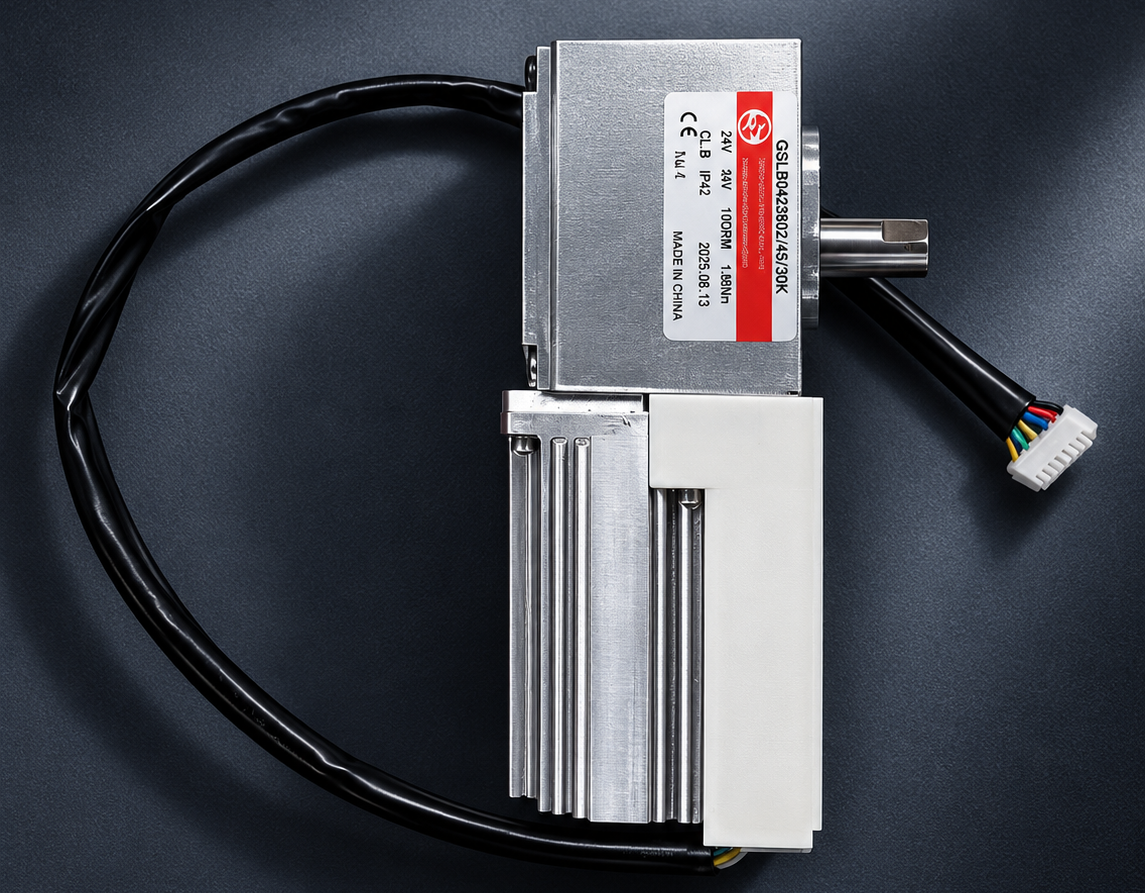
BLDC Motor for Rehabilitation Therapy Equipment
Rehabilitation therapy beds require controlled movement, stable speed and low operating noise. The motor system must maintain smooth motion while handling changing loads during lifting, lowering and positioning.
Application Requirements
For rehabilitation equipment, motor performance is closely related to the user's physical comfort. Speed fluctuation, vibration and operating noise can become noticeable during repeated lifting or positioning movements.
The motor solution was therefore optimized around three main engineering objectives: lower operating noise, improved speed stability and stronger resistance to changing loads.
The solution combines low-speed motor design, FOC sinusoidal control and structural damping to address the motor system as a complete motion solution.
Low-Noise BLDC Motor Design
Low operating noise is particularly important in rehabilitation environments. The motor solution uses coordinated mechanical, electrical and structural optimization to reduce noise from multiple sources.
Low-Speed Motor Design
The motor is designed for approximately 10 RPM operation and combined with a 230:1 reduction ratio to support controlled low-speed movement.
FOC Sinusoidal Control
Field-oriented control provides precise vector control and smoother current waveforms, helping reduce torque pulsation and associated electromagnetic noise.
Controller Housing Damping
Damping elements were incorporated into the controller housing to reduce vibration transmission and secondary structural resonance.
Maximum operating noise after optimization
Maximum speed deviation after optimization
Precision Speed Control for Smooth Movement
Speed consistency is important for rehabilitation equipment because movement fluctuations can affect physical comfort during lifting, lowering and positioning.
The motor winding turns and winding configuration were optimized to stabilize the motor around the approximately 10 RPM operating range.
The resulting maximum speed deviation was reduced from 4.80% to 3.00%, supporting smoother and more consistent linear movement.
Improved Resistance to Changing Loads
Rehabilitation therapy beds can experience different loads as users sit, lie down or change position. Stable motor performance under changing torque is therefore important for consistent movement.
Through optimized winding design, the dynamic slope describing speed variation with torque change was reduced from 5.94 to 5.04.
The improved performance helps suppress speed drop when the therapy bed experiences increased load or sudden resistance changes.
A Three-Dimensional Approach to Motor Optimization
Instead of relying on a single modification, the solution combines motor design, control technology and structural optimization.
Motor Design
Optimized winding design and low-speed operating characteristics were used to improve speed stability, noise performance and load response.
FOC Control
Field-oriented control was used to provide smoother current waveforms and more precise motor control.
Structural Damping
Damping elements in the controller housing help reduce vibration transmission and secondary structural resonance.
Measurable Motor Performance Improvements
The optimized motor configuration achieved measurable improvements across noise, speed stability and load response.
Rehabilitation Therapy Bed Motor Configuration
Designed Around Rehabilitation Equipment Requirements
Quieter Operation
Maximum operating noise was reduced to 38.9 dB under the specified measurement conditions.
Smoother Movement
Reduced speed deviation supports more consistent lifting and positioning movement.
Improved Load Stability
Improved overload rigidity helps suppress speed drop when the load changes.
Application-Specific Design
Motor winding, reduction, control and structural characteristics can be coordinated around equipment requirements.
Looking for a BLDC Motor for Your Equipment?
Share your required speed, torque, voltage, dimensions, duty cycle, noise requirements and application conditions with our engineering team.