
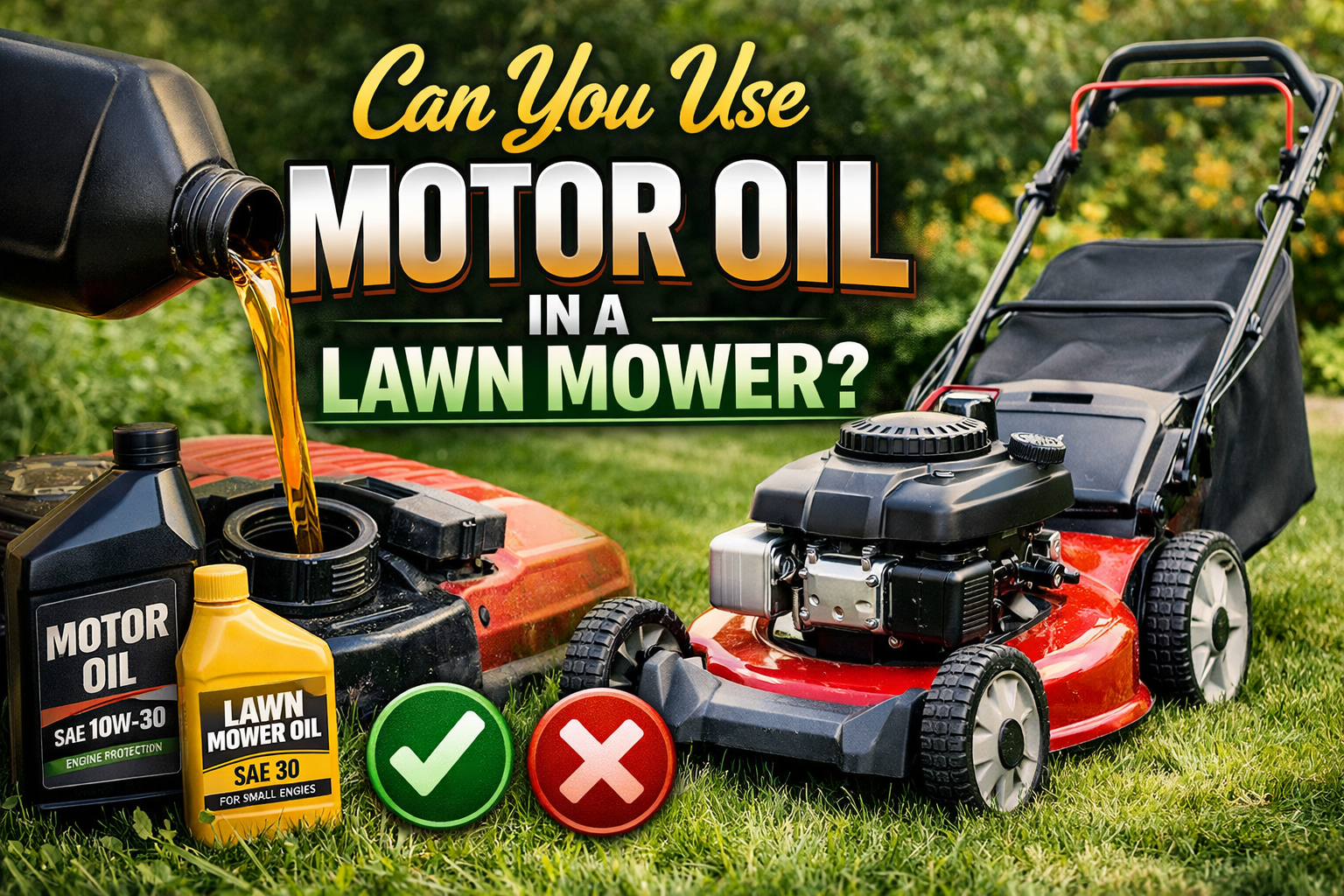
Can You Use Motor Oil in Lawn Mower?
When your lawn mower is due for an oil change, one simple question usually comes up: Can you use motor oil in a lawn mower? The short answer is yes—but only if you choose the right type and viscosity. The wrong oil can shorten engine life, increase fuel use, and even void your warranty. At United Motion Inc., we work with electric and mechanical drive systems every day, and we often see how lubrication choices directly affect motor durability and performance. In this guide, we will explain everything in plain language so you can protect your mower and avoid expensive mistakes.
Why Lawn Mower Oil Matters More Than You Think?
A lawn mower engine may look small compared to a car engine, but it works under heavy load. It runs at high RPM for long periods, often in hot weather, and usually without an advanced cooling system. Most push mowers use air-cooled engines, which means oil plays an even bigger role in temperature control and friction reduction.
Using the wrong oil can lead to overheating, carbon buildup, poor lubrication, and faster wear on bearings and piston rings. Over time, this reduces compression, increases smoke, and causes hard starting. That is why choosing the correct lawn mower engine oil is not just about maintenance—it is about protecting your investment.
Can You Use Regular Motor Oil in a Lawn Mower?
Yes, you can use regular motor oil in a lawn mower—but only if it matches the engine manufacturer’s recommended viscosity grade. Most small gasoline lawn mower engines are designed to use SAE 30 oil in warm temperatures. In cooler climates, 10W-30 motor oil is often recommended because it flows better at lower temperatures.
The key point is this: lawn mower engines usually require detergent automotive oil, not specialty oil. However, you should always check your owner’s manual before adding anything. Brands like Briggs & Stratton, Honda, and Toro clearly list the acceptable oil grades for each engine model.
Can You Use Synthetic Oil in a Lawn Mower?
Another common question is whether synthetic oil is safe for lawn mower engines. The answer is yes—most modern small engines can safely use synthetic oil as long as the viscosity matches the manual.
Synthetic oil offers several advantages:
- Better temperature stability
- Improved cold starting
- Reduced sludge formation
- Longer oil life
Many professional landscapers prefer synthetic oil for commercial mowing because it reduces engine wear over time. However, if your mower is older, check compatibility first. Some older seals may not respond well to synthetic formulas, although this is rare with modern products.
What Happens If You Use the Wrong Oil?
Using the wrong oil viscosity can cause several problems. If the oil is too thick, the engine may struggle during startup and lubrication may be delayed. If the oil is too thin, it may not provide enough protection under heat and load.
Common symptoms of incorrect oil include:
- Excessive engine noise
- Blue or white exhaust smoke
- Higher oil consumption
- Reduced engine power
- Overheating
Long term, incorrect lubrication leads to premature bearing wear and piston damage. At United Motion Inc., we often remind equipment buyers that proper lubrication is one of the simplest ways to extend motor lifespan.
How Much Oil Does a Lawn Mower Need?
Most push lawn mowers require between 15 to 20 ounces of oil. Riding mowers may require more, sometimes up to 48 ounces depending on engine size. Overfilling is just as dangerous as underfilling. Too much oil can cause pressure buildup, leaks, and smoke.
Always check the dipstick after filling. The oil level should sit between the minimum and maximum marks.
How Often Should You Change Lawn Mower Oil?
For new engines, change the oil after the first 5 hours of operation. After that, change it every 25–50 hours of use or once per mowing season. Commercial users may need more frequent changes.
Dirty oil contains metal particles, combustion residue, and contaminants. These reduce lubrication quality and increase engine wear. Fresh oil protects internal components and maintains performance.
Can You Mix Different Types of Motor Oil in a Lawn Mower?
In emergencies, mixing oils of the same viscosity is usually safe. For example, mixing SAE 30 with another SAE 30 brand is fine. However, avoid mixing conventional and synthetic oils regularly. While they are generally compatible, performance may be reduced.
For best results, stick with one oil type and change it fully instead of topping off with random products.
What About 2-Stroke Lawn Mowers?
Two-stroke engines are different. They do not have a separate oil reservoir. Instead, oil must be mixed with gasoline at a specific ratio. Never pour regular motor oil into a two-stroke engine crankcase. Always use 2-cycle engine oil designed for fuel mixing.
If you are unsure whether your mower is 2-stroke or 4-stroke, check the manual. Most modern residential mowers are 4-stroke engines.
Does Lawn Mower Oil Affect Fuel Efficiency?
Yes, indirectly. Proper oil reduces friction, which allows smoother engine rotation. Lower friction improves mechanical efficiency and can slightly reduce fuel consumption. Poor lubrication increases drag and makes the engine work harder.
In industrial motor applications, the same principle applies. Friction control improves energy efficiency and extends mechanical life.
Electric Lawn Mowers vs Gas Lawn Mowers
With the growth of electric mobility and efficient motor design, many homeowners are switching to electric lawn mowers. Unlike gasoline engines, electric mowers do not require oil changes. They use electric motors instead of combustion engines.
Companies like EGO Power+ and Greenworks are popular in this segment.
At United Motion Inc., we specialize in electric motor systems, including brushless DC motors used in outdoor equipment. Electric motors reduce maintenance costs and eliminate oil-related issues entirely.
Common Lawn Mower Oil Mistakes to Avoid
Many homeowners make simple but costly mistakes:
- Using leftover car oil without checking viscosity
- Ignoring seasonal temperature changes
- Skipping oil changes
- Overfilling the crankcase
- Using non-detergent oil
Avoiding these mistakes can add years to your mower’s life.
How to Change Lawn Mower Oil Properly?
Run the engine briefly to warm the oil.
Turn off and disconnect the spark plug.
Drain old oil completely.
Replace the drain plug securely.
Add new oil slowly.
Check dipstick level.
Dispose of used oil responsibly at a recycling center.
Environmental Considerations
Used motor oil is hazardous waste. Never pour it onto soil or into drains. Recycling oil protects groundwater and reduces environmental impact. Many auto parts stores accept used oil for free.
Why Electric Motors Are Changing Outdoor Equipment?
Electric motor technology is rapidly transforming the outdoor power equipment industry. Brushless DC motors provide several advantages over traditional gasoline engines.
First, they operate with significantly fewer moving parts. This reduces mechanical wear and lowers maintenance costs. Second, they deliver instant torque, which improves cutting performance in lawn equipment. Third, they operate more quietly and produce zero emissions during operation.
Because electric motors do not rely on oil for lubrication, they eliminate one of the most common maintenance concerns for homeowners.
As battery technology continues to improve, electric outdoor equipment will likely become even more widespread.
Frequently Asked Questions
Can I use car oil in my lawn mower?
Yes, if it matches the recommended viscosity grade.
Can I use synthetic oil in my mower?
Yes, if it matches the required viscosity.
How often should I change lawn mower oil?
Every 25–50 hours or once per season.
References
Briggs & Stratton – Small Engine Oil Recommendations
Honda Power Equipment – Engine Oil Guidelines
Toro Lawn Care – Maintenance and Lubrication Guide
U.S. Environmental Protection Agency – Used Oil Disposal Guidelines
Related blog: What motor do electric lawn mowers use?