
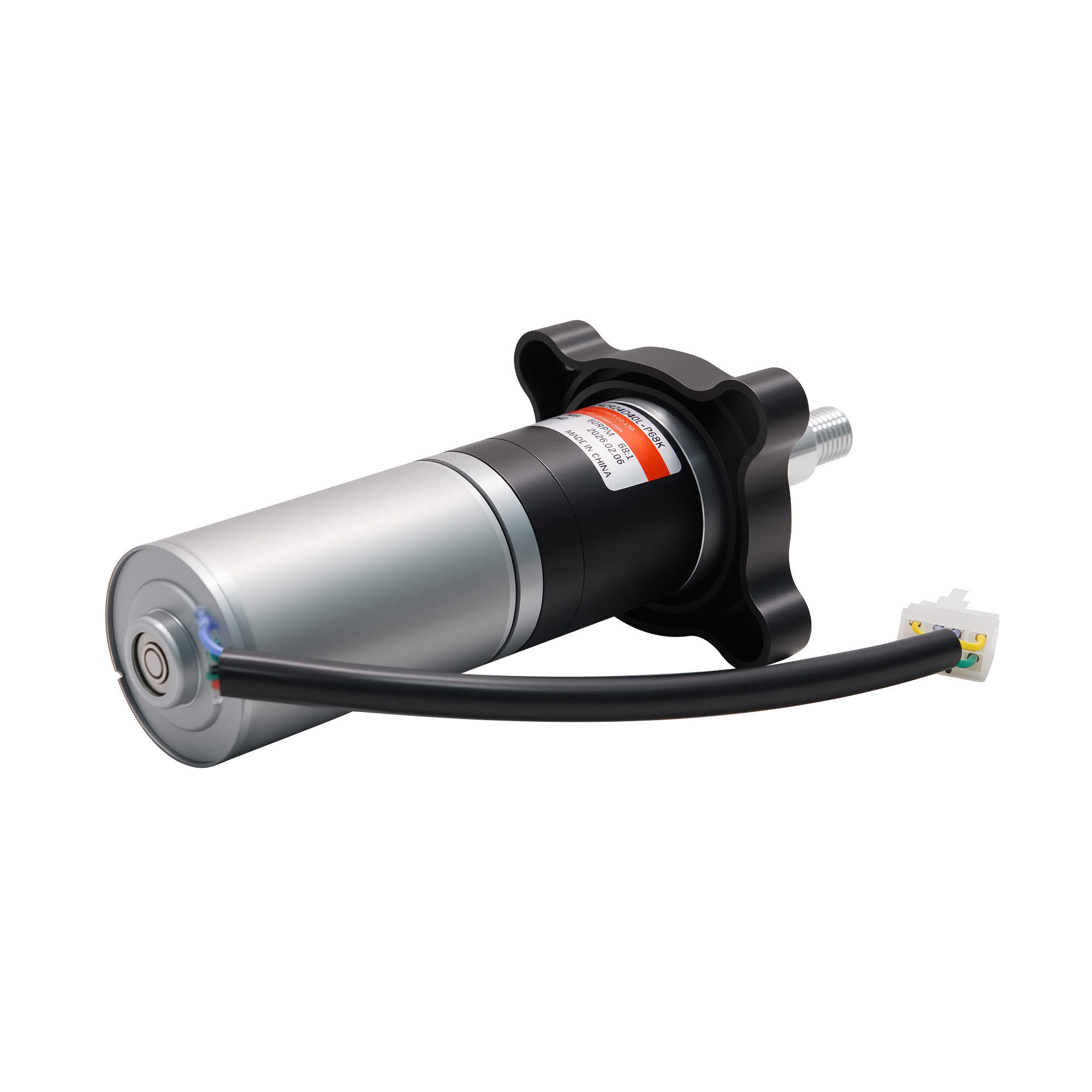
In industrial automation and precision machinery, one question keeps coming up: can BLDC motors really handle low-speed, high-torque demands effectively, or are they being pushed beyond their natural strengths? This is not just a technical curiosity—it directly impacts system reliability, cost, and long-term performance.
Many buyers searching for “BLDC motor low speed torque performance” or “high torque brushless DC motor solutions” are trying to solve very practical problems. They are dealing with heavy loads, precise positioning, or slow rotational systems where consistency matters more than speed. Understanding how BLDC motors behave in these conditions is essential before making a purchasing decision.
Understanding the Basics: What Makes BLDC Motors Different
Brushless DC motors, commonly referred to as BLDC motors, rely on electronic commutation instead of physical brushes. This design eliminates mechanical wear components and allows for higher efficiency, longer lifespan, and better controllability.
However, the core design also means that torque production depends heavily on the control system, not just the motor itself. Unlike traditional brushed motors, BLDC motors require a controller to manage current and switching sequences. This is where performance in low-speed conditions becomes highly dependent on system integration rather than motor design alone.
From a buyer’s perspective, this introduces both an opportunity and a risk. The opportunity lies in precise control and customization. The risk lies in underestimating the importance of the driver and control algorithm.
The Real Challenge: Low-Speed, High-Torque Demands
Low-speed, high-torque applications are common across industries. These include robotic joints, conveyor systems, medical devices, AGVs, and electric actuators. In these systems, the motor must deliver strong torque without relying on high rotational speed.
The difficulty comes from the physics of BLDC motors. At lower speeds, back EMF is reduced, which can make current control less stable if not properly managed. This often leads to torque ripple, vibration, or inconsistent performance if the system is not optimized.
This is why many engineers searching for “BLDC motor torque at low RPM” or “brushless motor torque stability” are concerned about whether these motors can truly replace traditional solutions like stepper motors or geared DC motors.
Torque Production in BLDC Motors: What You Need to Know
Torque in a BLDC motor is directly proportional to current. This sounds simple, but in practice, maintaining smooth current at low speeds is challenging without advanced control methods.
At low speeds, the motor relies heavily on accurate rotor position detection. If the feedback system—such as Hall sensors or encoders—is not precise enough, torque output can fluctuate. This results in uneven motion, which is unacceptable in precision applications.
Modern solutions address this by using Field-Oriented Control (FOC). This method allows for smooth torque delivery even at near-zero speeds. Buyers looking for “FOC BLDC motor performance” or “low speed brushless motor control” should prioritize systems that support this technology.
The Role of Gear Reduction in High Torque Output
In real-world applications, BLDC motors rarely operate alone when high torque is required. Gearboxes are commonly used to multiply torque while reducing speed.
A properly matched gear motor can transform a high-speed BLDC motor into a powerful low-speed solution. This is why many buyers search for “BLDC gear motor high torque” or “planetary gearbox brushless motor”.
However, gear selection is critical. Poor-quality gearboxes introduce backlash, noise, and efficiency losses. High-quality planetary or harmonic gear systems are often preferred for applications requiring precision and durability.
From a sourcing standpoint, it is often more efficient to purchase an integrated BLDC gear motor system rather than combining components separately.
Comparing BLDC Motors with Alternative Technologies
When evaluating low-speed, high-torque performance, it is important to compare BLDC motors with other motor types.
Stepper motors are known for strong holding torque at low speeds, but they suffer from resonance issues and lower efficiency. Brushed DC motors offer simple control and decent torque but require frequent maintenance due to brush wear.
Servo motors, especially AC servo systems, deliver excellent torque control and precision, but they come at a higher cost and complexity.
BLDC motors sit in the middle. They offer a balance of efficiency, lifespan, and controllability. With proper control and gearing, they can match or even exceed the performance of alternatives in many applications.
This is why search trends for “BLDC vs stepper motor torque” and “BLDC vs servo low speed performance” continue to grow.
Common Pain Points Buyers Face
Buyers evaluating BLDC motors for low-speed, high-torque use often encounter several recurring issues.
One major concern is torque ripple. Without proper control algorithms, the motor may produce uneven torque, leading to vibration or noise. This is particularly problematic in medical devices or precision robotics.
Another issue is startup torque. Some systems struggle to deliver sufficient torque at zero or near-zero speed, especially if the controller is not tuned correctly.
Thermal management is also a concern. High torque usually requires higher current, which increases heat generation. Without proper cooling or motor sizing, this can shorten lifespan.
Finally, integration complexity can slow down projects. Selecting the wrong driver or mismatched components often leads to performance issues that are difficult to diagnose.
How to Optimize BLDC Motors for Low-Speed Applications?
To achieve reliable performance, several key factors must be addressed during system design.
- First, choose a motor with a high torque constant. This ensures that the motor can produce more torque per amp of current, improving efficiency and stability.
- Second, use an advanced controller with FOC capability. This is essential for smooth torque output and precise control.
- Third, consider adding a high-quality gearbox. This not only increases torque but also improves controllability at low speeds.
- Fourth, ensure accurate feedback. Encoders provide better precision than Hall sensors, especially for demanding applications.
- Finally, pay attention to thermal design. Proper heat dissipation is critical when operating at high torque levels for extended periods.
Real-World Applications Where BLDC Motors Excel
Despite the challenges, BLDC motors perform exceptionally well in many low-speed, high-torque applications when properly configured.
In robotic systems, they provide smooth and precise motion, especially when combined with harmonic drives. In electric vehicles and AGVs, they deliver efficient torque for heavy loads.
Medical equipment benefits from their quiet operation and reliability. Industrial automation systems use them for conveyors, actuators, and positioning systems where consistent torque is essential.
These real-world use cases explain why demand for “high torque BLDC motor manufacturer”solutions continues to grow globally.
Industry Trends and Future Outlook
The performance of BLDC motors in low-speed applications is improving rapidly due to advancements in control algorithms and power electronics.
Sensorless control methods are becoming more sophisticated, reducing the need for physical sensors while maintaining accuracy. Integrated motor-driver solutions are simplifying system design and reducing development time.
Additionally, the push for energy efficiency and maintenance-free operation is driving adoption across industries.
For buyers, this means that BLDC motors are no longer just an alternative—they are increasingly becoming the preferred solution.
Final Thoughts: Are BLDC Motors the Right Choice?
BLDC motors can perform very well in low-speed, high-torque applications, but only when the system is designed correctly. The motor alone is not enough—the controller, feedback system, and mechanical setup all play critical roles.
For buyers and engineers, the key is to look beyond basic specifications and evaluate the complete system. Investing in the right combination of motor, driver, and gearbox can deliver outstanding performance and long-term reliability.
At United Motion Inc., we focus on providing integrated motor solutions that address these exact challenges. By combining optimized motor design with advanced control and gearing options, we help customers achieve reliable low-speed, high-torque performance without unnecessary complexity.
References
1. Krishnan, R. Permanent Magnet Synchronous and Brushless DC Motor Drives. CRC Press
2. Bose, B. K. Modern Power Electronics and AC Drives. Prentice Hall
3. Texas Instruments – BLDC Motor Control Application Notes
4. STMicroelectronics – Field-Oriented Control (FOC) Technical Documentation
5. IEEE Papers on Low-Speed Motor Control and Torque Optimization
6. Industry reports on industrial automation motor trends (2023–2025)